


ASK & DISCUSS
INDEXWould a UK rival to Netflix/Amazon Video save/boost the UK independent film industry?

7 years, 8 months ago - Matthew Prince
With Netflix building its programming budget year on year to stupendous levels ($5 billion in 2016, $6 billion in 2017 and $7 billion this year (nearly double the BBC's entire revenue), if we had a UK based rival to Netflix/Amazon Video would this save or boost the UK independent film industry?
Imagine a UK streaming media website curated to have popular Hollywood and British hits of the last 60 years, cult horror/sci-fi and world cinema while reinvesting profits in original British premium drama, comedy and movies, free from compromising to the demands of ad agencies or too many executives.
The website could develop brands to different genres and minorities while maintaining links with cinemas and retailers ensuring popular and unique content could still receive limited cinema and 4K/Blu-ray releases, promoting early and exclusive streaming and allowing filmmakers to earn much more and be seen with a guaranteed platform for their work and multiple avenues of profit.
They could branch out into full-scale feature film production as well, a standard linear digital cable/satellite subscription channel AND an App to watch through Smart TVs and Smartphones.
Now of course I have no idea how much this would cost to set up (probably millions upon millions), and I'm not Richard Branson sadly, but I regularly see many people on SP and elsewhere trying to set up projects on nothing more than food and travel expenses or just a few hundred quid. In 2018, many of us still and probably will continue to rely on and apply for funding to make features and short films. It's been like this for nearly 20 years.
If a website like this was around, offering new and experienced writers, directors and actors the chance to film original content for £25,000 - £500,000+, without complicating things like the BFI and local film councils usually do surely that would do wonders for the UK industry?
If anything, maybe it would put a stop to these awful UK horror, hooligan, East End gangster and urban movies produced by men of dubious reputations and starring TV actors, rappers, faded pop singers and former soap stars...
Only members can post or respond to topics. LOGIN
Not a member of SP? JOIN or FIND OUT MORE

7 years, 8 months ago - Paddy Robinson-Griffin
Problem is that Netflix are burning through money hand over fist to try to buy the dominant market position. They are losing so, so much money at the moment that they need VERY deep investor pockets through the Silicon Valley (very irrational) tech valuations/IPO bubble farm.
They're also finding challenges in going from a DVD by post company to a straight distributor to a content creator - they themselves claim to be a "technology company" and are learning some lessons about being a cable network (in effect). The problem is that TV shows have a very finite life and go stale fast. Couple of years back it was ALL about GoT (for instance), now that's old news. The viewing figures drop off when the story is over, naturally enough, but their platform suits long-tail content (like movies). The shift from syndicated to commissioned content is very, very expensive, and they are taking fewer and fewer movies.
Movies have that big theatrical promotion, have the Oscars, BAFTAs, festivals, etc to promote them. Netflix Originals just don't have that promotional muscle, and so even Netflix "features" will not have the same level of hype and replayability.
How do you compete with a company that is losing investors billions, and still get access to the theatrical promotional mechanics for lower budget films that compete with free TV and "real" movies? £25k-£500k is basically nothing in terms of professional production, that's the bottom of the budget range of those films you hate! :'-(
Not disagreeing BTW, just wanting to add a little industry context :)
7 years, 8 months ago - Mark Wiggins
Speaking as a technician, it is irrelevant where the money comes from to fund productions. Game of Thrones is made in Northen Ireland with British technicians and a lot of the money spent on it goes into the Northern Ireland economy. Star Wars is shot at Pinewood with British technicians and most of the money spent on it goes into the UK economy.
In fact, so much is being shot here that we have run out of stage space with ex-industrial buildings being used as production space. Shepperton is expanding, Pinewood is expanding again and new studios are planned for Scotland and London.
From a technicians point of view, things have never been better. If the British Film Industry is the sum of the people who work in it, the British Film Industry is in a healthy state. Who cares where the money comes from so long as a lot of it ends up being spent here, employing British people.
And when it comes to the money these companies make from productions shot here; a lot of it is ploughed back into more productions being shot here.
7 years, 8 months ago - Matthew Prince
Plenty of movies and TV shows are shot here and that's great, but of all these films shot here the money made by them goes back to the American studios.
Of course, Britain has always been known for the quality of its facilities and technicians, especially post-production.
But many actors and directors such as Christopher Nolan cite that they have to go America to move their career forward as there isn't enough money or the "establishment" doesn't approve of them. Ironically, they end up shooting US movies and TV shows set in the UK!
7 years, 8 months ago - Mark Wiggins
@Matthew Prince As I said, the money made does go back to the studios making those productions but then they spend the money they make on making more productions back here.
Many of the productions that Netflix make are made as co-productions with other braodcasters/production companies in other countries, including the BBC. They give money to, for example the BBC, which then makes up part of the budget (allowing the BBC to make bigger budget productions than they would otherwise have made), and, in return, Netflix gets to put the finished product on their website. You've only got to look at Netflix to see the amount of British/Astralian/French/German etc productions on there. Many of them made as co-productions, many of them wouldn't have been made without Netflix's involvement and so their casts and crew would not have been employed on them.
Christopher Nolan has just shot Dunkirk. Largely shot in Europe with a European and British crew. With the vast majority of the production spend being spent in Europe and the UK. All that money being pumped into the European economy and employing European people. So, as I say, it is irrelevent where that money comes from as long as it gets spent here and, a lot of the money being made by that movie will end up back here, being spent on more productions being made on this side of the pond.
Yes, a lot of it has to do with tax breaks. But they exist everywhere. Atlanta is a very notable examaple of a US city that employs them. Hence the huge film industry there.
7 years, 8 months ago - Matthew Prince
Well when I quoted £25,000-£500,000 I was talking about entry level content, that can be made by new filmmakers without any risk to the website.
The reason I posed this question is that in 2018, we still don't have a group of vertically integrated film companies in the UK able to instantly source finance, develop scripts, produce films, release them and build their own catalogue like the Rank Organization.
Working Title is the UK's most famous production company but it was bought by Universal Studios in the late '90s, receives a set budget every year and has to co-produce to make bigger productions.
Very few good independent British films can be made without BFI, Channel 4, BBC or Sky funding alongside American or European finance.
And if the government removed all tax breaks then the Hollywood blockbusters would disappear from UK soundstages and head to studios in South Africa, Australia, Bulgaria and cities like Atlanta, North Carolina and New Orleans in the U.S.

7 years, 8 months ago - Tony Franks
A great issue, Matthew. But history shows us the UK has not been able to emulate Hollywood for fully-consolidated, start-to-finish, SUSTAINABLE film studios. The US has a long history of well-financed film visionaries with highly aggressive business practices and acumen. The UK has often tried to copy the US model but through the decades has often fell embarrassingly short. Maybe the 'aggressive' part is in short supply here in the UK? So I'm not sure trying to duplicate Amazon/Netflix is the way forward... maybe some other angle is required, playing to other proven strengths.
One that came close: Polygram. This from Wikipedia:
PolyGram Filmed Entertainment (formerly known as PolyGram Films and PolyGram Pictures or simply PFE) was a British-American film studio founded in 1980 which became a European competitor to Hollywood, but was eventually sold to Seagram Company Ltd. in 1998 and was folded in 2000. Among its most successful films were An American Werewolf in London (1981), Flashdance (1983), Four Weddings and a Funeral (1994), Dead Man Walking (1995), Mr. Holland's Opus (1995), Fargo (1996), Trainspotting (1996) and Notting Hill (1999).

7 years, 8 months ago - Marlom Tander
It's not about making content, it's about selling it.
All good business plans aimed at a mass market start with market analysis and work back.
Streaming services live/die by their subscriber base, at least initially. Ads bring money later.
Subscribers for films don't like to pay much - a tenner a month maybe. Call it 100 a year after VAT/costs. And they want the content in their language.
1,000,000 subscribers gets you 100M to spend
Ten MILLION subscribers gets you 1Bn.
So if you want to be able to compete with the big boys you need a plan to generate tens of millions of subscribers, and there are only two countries that can do that internally.
The Netflix/Amazon competitor will be Chinese. The BBC/C4 do a good job, long may they live.
Point of note - Netflix started as a "DVD by post" service and built a solid business that way. Didn't do streaming for at least a decade. Amazon started with books and ditto. BOTH of them had nailed the "dealing with millions of customers at almost no cost" issue years before they went streaming.
The company that focussed on data wrangling and delivery has pretty much failed to build a paid for streaming base, but hey, YT ads seem an effective alternative approach to making money :-)

7 years, 8 months ago - Vasco de Sousa
The UK has James Caan, Richard Branson, and many other billionaires we never heard of. London has many of the wealthiest people in the Western world, and I often hear it has the most billionaires per capita. There's so much wealth here, it sometimes seems obscene.
Unfortunately, a lot of the talent flies west at the first opportunity. (And the "creatives" who stay only seem to have the talent for making excuses.)
Hollywood, however, attracts the foreigners with money (Dutch, French, Japanese) as well as foreigners with talent. Bollywood does that too, and France does that in a small way. Britain does that in other industries (especially finance and football), but has become a closed community when it comes to film. (Where are the Alexander Korda's of today?) Film subsidy effectively shuts out "foreigners" in making "British" films. Could The Third Man be made today?
What the UK needs is not only a Netflix, but to rekindle its reputation for creativity (rather than just an adaptation hotspot and tax-credit draining glut.) However, people like you could be a part of that.
You have my complete support in this. I renounced my American citizenship because I'm sick of the paperwork and bullying, and I'm not the only one. I think we can use anti-Trump sentiment to our economic advantage, maybe get some British patriots and American ex-patriots to invest. Your ambition fires me up.

7 years, 8 months ago - Alice Charles
In theory, this is a great idea. But in practice what would happen is that the same people will end up doing the commissioning - ie white, male and middle-class - who will commission others like them to produce projects they want to see. There will be only token diversity. Netflix made this mistake when it first started - and it still hasn't course-corrected to any significant extent. I'd like to see an Indian or Chinese Netflix - now, that would be a gamechanger!
7 years, 8 months ago - Vasco de Sousa
Sounds extremely judgemental and pessimistic. I have seen a Nigerian "netflix", not IrokoTV, but another one, and there's more than one Indian one as well. (I did that research when I was looking for distribution for one of my own films. I was avoiding US companies for paperwork reasons after Vimeo threatened to confiscate 1/3 of my earnings.)
I don't remember the links now, but if you ask nicely I might find them.
French cinema is also pretty diverse (not the French cinema that travels, but the films that French people watch.)
Among the billionaires in the UK are Sikh, Muslim and members of other minorities, and quite a few wealthy people here worked their way up. Even if they haven't, they understand the business value of working class characters, hence Michael Caine's career.
I sometimes find it hard to relate to characters, the wealthy white-collar white man that contemporary American cinema seems infatuated with. I wish there were more distribution for films like Smoke Signals and Frozen River, and that the British equivalents would get made more often.
I miss the old films with female protagonists that aren't action heroes or super corny. Golden Girls, I Love Lucy, and Benson, all created by women, were among my favourite shows growing up. And, of course, before Bill Cosby had the scandal, his shows were an inspiration, from Fat Albert to Different World.
But, I have nothing against Middle Class white males (or females) giving me money if they want. Oscar Wilde made some pretty good plays for that audience. I also loved the first Ghostbusters.
And, Alice Charles, if you want to join the company, perhaps you could help do the commissioning? Why not be part of the company, and help make the decisions?
7 years, 8 months ago - Vanessa Bailey
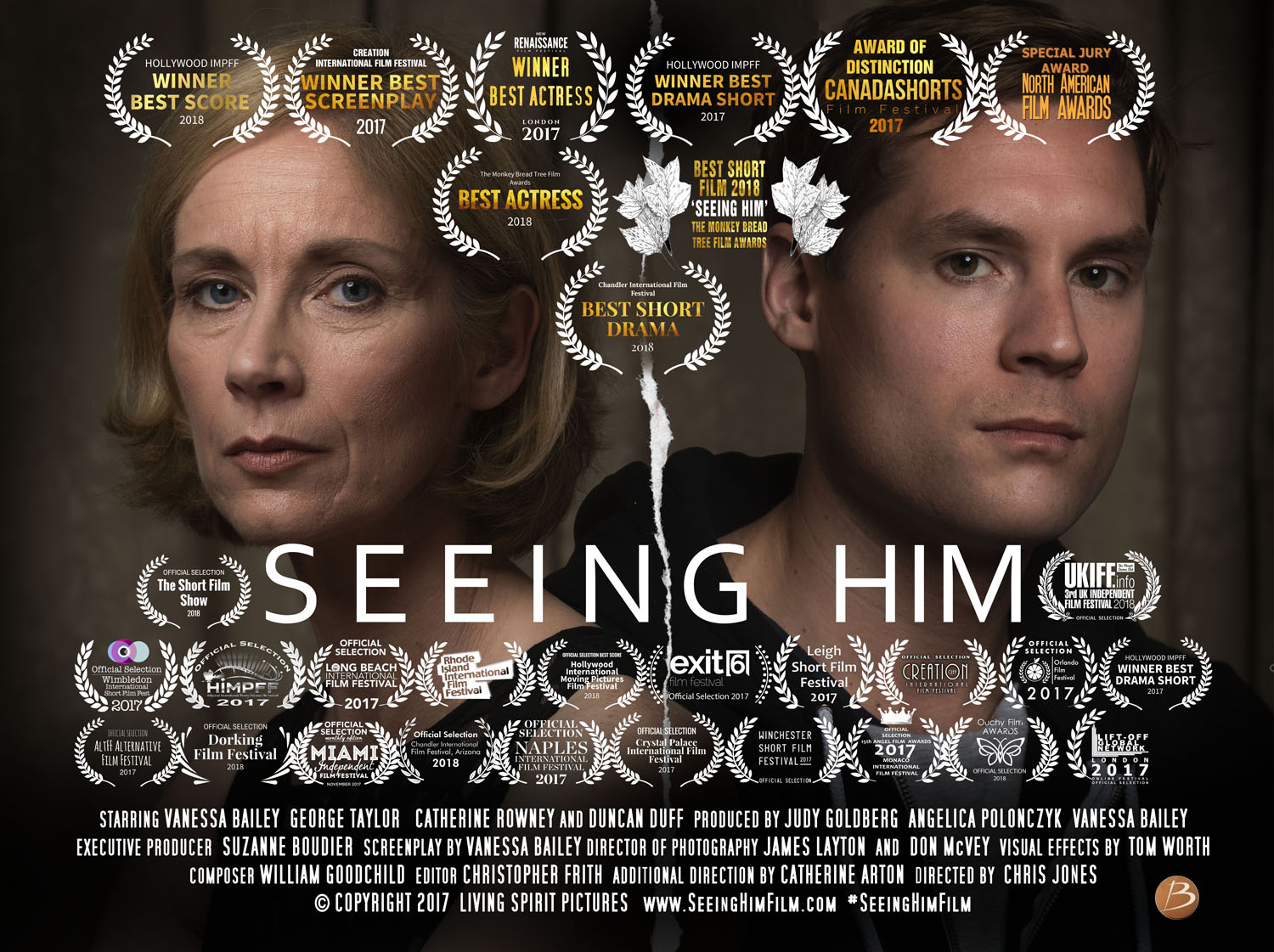
On the flip side, Alice, as a female filmmaker (not at the level of looking at distribution, just pointing up an observed British filmmaking dynamic) my film which is written by, produced by and stars women has been rejected by 100% of the female-focussed film festivals. Not one acceptance. However, it has been accepted into 23 other festivals (including selectiong to screen at the opening gala night of Rhodes Island) and has won nine awards by festivals run by the "patriarchy". So as far as politics in filmmaking and reach is concerned I have yet to discover an issue with the white, middle class male repression we're meant to be suffering under and yet to discover the support and amplification from the "sisterhood". Am quite happy, and grateful, for the men to amplify my voice, if the women feel unable to. ;P

7 years, 7 months ago - Lawrence Perry
I heard that after Brexit that the tax credit here will rise to 45%, making it equal with New Zealand and Australia.
7 years, 7 months ago - Matthew Prince
Is this a good thing? Does that mean the UK is offering more incentives to foreign filmmakers or IS more appealing to foreign filmmakers? I thought Brexit was bad for the UK film industry. So with the new tax breaks we could compete with Australia/New Zealand and bring those productions here?
7 years, 7 months ago - Mark Wiggins
Haven’t heard about increase in tax break. We’ve got so many productions coming here now, the present tax breaks are working just fine.